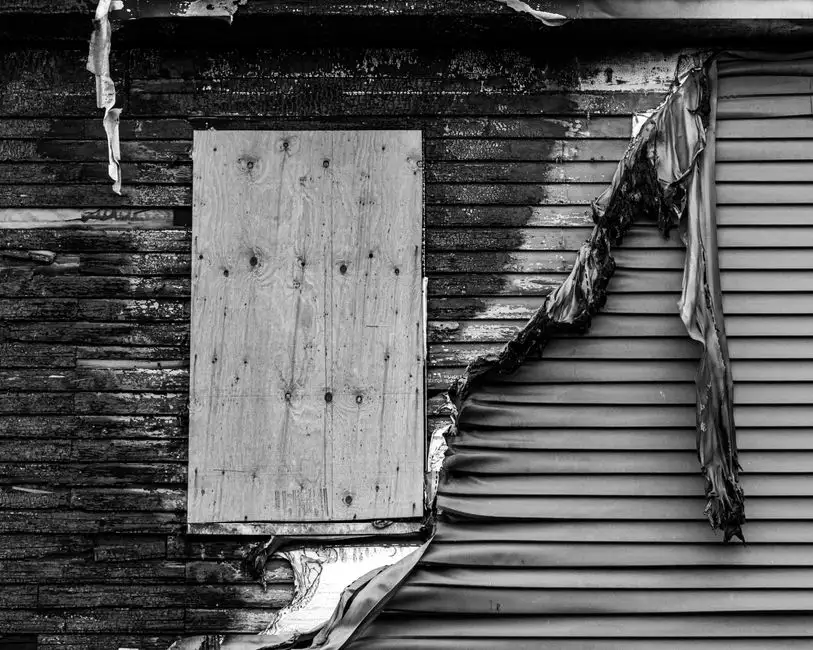
The clearest sign of hidden water damage behind siding in Blue Ash OH is a soft, spongy spot you find by pressing on the wall under a window or roofline - not a stain you can see. Water almost never announces itself on the exterior. It slips past a failed caulk joint, a lifted piece of J-channel, or a nail head that backed out two winters ago, then sits against the sheathing and framing where you can't see it.
We're Pulse Mender, a siding contractor working out of Blue Ash, and we've opened up enough walls in this city to know the pattern. Below are the signs we actually find, how to check your own home in about 30 minutes, what repairs run in 2026, and when it's time to stop poking at it and call someone.
What hidden water damage behind siding Blue Ash OH actually looks like
Hidden water damage behind siding Blue Ash OH is moisture intrusion that has reached the sheathing, house wrap, or framing without breaking through to the interior drywall yet. That last part matters. Once you see a brown ring on your ceiling, the water has already been traveling for months - sometimes through two winters.
The damage usually starts at a penetration point. Caulk joints around windows and doors, the seam where two pieces of siding butt together, a dryer vent, an outdoor spigot, or the bottom edge of a piece of trim. Water gets in, hits the paper or foam house wrap, and either drains down the wall cavity or wicks sideways into the OSB. OSB is the real problem. It swells, delaminates, and loses structural strength fast once it stays wet.
Vinyl siding is the most common cladding on Blue Ash homes built between the mid-1980s and 2010, and it's also the most forgiving - until it isn't. Vinyl hides water well because it doesn't stain or rot. The wall behind it does all the suffering.
The 8 signs we find most often in Blue Ash
These are the signs of hidden water damage behind siding in Blue Ash OH that we look for on every inspection, in roughly the order we find them.
- Soft spots when you press the wall. Push firmly with your thumb under windows, at corners, and along the bottom course of siding. Healthy sheathing feels solid. Damaged sheathing gives like wet cardboard.
- Paint or stain bubbling on trim. Moisture pushing from behind lifts paint. If the trim paint blisters in one area and not others, that's a leak, not sun damage.
- Musty smell inside a room near an exterior wall. A closed-up bedroom or closet that smells like a wet basement is a classic sign. The wall is drying inward.
- Siding that looks wavy or buckled. Vinyl panels warp when the substrate behind them swells. If one section of your siding has a ripple and the rest is flat, water is trapped back there.
- Rust streaks or dark staining below fasteners. Nails and screws bleed rust when they stay wet. Look for thin vertical rust lines on the siding face.
- Loose or missing caulk at window and door frames. Run your finger along the joint. If the caulk peels away in a strip, water has been getting behind it.
- Pest activity. Carpenter ants and termites follow moisture. Small piles of sawdust or frass near a wall base mean something behind that wall is wet.
- Higher-than-normal heating bills in winter. Wet insulation loses R-value. If one room runs cold and you can't explain it, the wall cavity may be saturated.
Any two of those together is enough reason to open the wall and look.
How do I check for water damage behind siding in Blue Ash, Ohio?
You can check for water damage behind siding in Blue Ash, Ohio in about half an hour with a screwdriver, a flashlight, and a moisture meter if you have one. Start outside on a dry day, not right after rain - you want to see what's already there, not what just fell.
Walk the perimeter and press on the wall every 4 to 6 feet, paying extra attention under every window, at every corner, and along the bottom row of siding. Then get on a ladder and look at the top edge where siding meets the soffit. That's where wind-driven rain gets in most often on the west and north faces of a Blue Ash house.
If you find a soft spot, don't start pulling siding off unless you're ready to deal with what's behind it. Vinyl siding is interlocked and once you pop one panel, the ones above it want to come with it. A $30 pin-type moisture meter from a hardware store will tell you whether the sheathing is wet without opening anything - readings above 20% mean trouble, above 28% means active intrusion.
For anything beyond a visual check, our team handles siding repair contractors Blue Ash OH work every week and can tell you in 15 minutes whether you have a real problem or just tired caulk.
Why Blue Ash homes get hit harder than you'd expect
Blue Ash sits in a pocket of southwest Ohio where freeze-thaw cycles run 60 to 70 times per winter. That's the number that matters. Every one of those cycles, water in a hairline crack expands 9% by volume, then contracts. Caulk that would last 15 years in a milder climate fails in 7 or 8 here.
The housing stock plays a role too. A lot of the neighborhoods off Kenwood Road and Reed Hartman were built in the 1970s and 1980s with T1-11 and hardboard siding, and both materials are notorious for wicking water at the bottom edge. We see the same pattern in the older ranches near Blue Ash Elementary - original wood siding with 40-year-old paint, and the paint is the only thing keeping the wall dry.
If your home is in one of those pockets, it's worth having someone look at it before spring. For homeowners in the surrounding suburbs, we also handle local siding contractor Blue Ash OH work across the northeast side of Cincinnati, and the failure points are almost identical from one zip code to the next.
What to watch out for: mistakes that make it worse
The most expensive mistake we see is homeowners caulking over a wet joint. It traps the water in and accelerates the rot. If the wood behind a joint is soft, caulk is a band-aid on a broken bone.
Other things that backfire:
- Power-washing the siding to "clean up" a stain. A 3,000 PSI stream drives water past the same seals you're trying to protect. Use a garden hose and a soft brush, or hire it out.
- Patching one panel and calling it done. If one panel is warped, the sheathing behind it is wet, and so is the sheathing behind the panel next to it. Water travels sideways along the house wrap.
- Ignoring a small interior stain. A 2-inch water ring on the ceiling usually means 4 to 6 square feet of wet sheathing behind the wall.
- Waiting until spring. Water that's already in the wall keeps working all winter. Every freeze cycle makes the damage worse.
One more: don't assume your home inspector caught it. Standard inspections don't probe siding for moisture, and most don't move furniture or look behind stored items in a garage.
How much does water damage siding repair cost in Blue Ash OH?
Typical 2026 pricing in this area runs $450 to $1,200 for a spot repair where one section of siding and the sheathing behind it need to be replaced, and $2,800 to $7,500 for a larger repair that involves two or more wall sections, new house wrap, and fresh trim. Full re-siding on a 1,800-square-foot Blue Ash home lands between $11,000 and $19,000 depending on material.
What drives the number:
- Square footage of damaged sheathing. OSB replacement runs $3 to $6 per square foot installed.
- Whether framing is involved. If a sill plate or stud is rotted, add $800 to $2,500 for carpentry.
- Matching the existing siding. If your profile is discontinued, you may need to re-side a full wall to keep it looking right.
- Access. Second-story work or tight side yards add labor.
We quote the whole job upfront - you'll know the number before we start. If we open a wall and find less damage than expected, the price goes down, not up.
When to call a professional
Call us when you find a soft spot you can push in with your thumb, when you smell must-iness in a room that has an exterior wall, or when you've caulked the same joint twice in three years and it keeps failing. Those three things almost always mean water is getting in somewhere you can't see.
We also get called after a big storm when a homeowner notices siding that's loose or a piece of trim hanging off. That's usually a fast fix, but it's worth having us check the wall behind it while we're there. Our team handles emergency siding contractor Blue Ash OH calls for exactly this reason - a storm opens a gap, and every day it stays open, more water gets in.
If you're not sure whether it's serious, call anyway. A 15-minute look costs you nothing and saves you from finding out the hard way in February.
Frequently Asked Questions
What are the signs of hidden water damage behind siding in Blue Ash OH?
Soft spots when you press the wall, bubbling paint on trim, a musty smell near an exterior wall, wavy or buckled siding, and rust streaks below fasteners. Any two together usually means active moisture intrusion. Musty odor plus a soft spot is the strongest combination.
How do I check for water damage behind siding in Blue Ash, Ohio?
Press along the wall every 4 to 6 feet, focusing under windows and at corners. Use a pin-type moisture meter - readings above 20% mean the sheathing is wet. Check caulk joints at windows and doors. If you find soft spots, stop and call a pro before pulling panels.
Can water damage behind siding be repaired in Blue Ash OH?
Yes, in almost every case. We remove the affected siding, cut out and replace the wet sheathing, install new house wrap, and re-side the section. Minor repairs take one day. Larger jobs with framing damage run 2 to 4 days. Full replacement is only needed when damage spans most of the wall.
How much does water damage siding repair cost in Blue Ash OH?
In 2026, spot repairs run $450 to $1,200. Mid-size repairs involving two or more wall sections run $2,800 to $7,500. Full re-siding on a typical Blue Ash home runs $11,000 to $19,000. We quote the full job upfront before any work begins.
Does homeowners insurance cover water damage behind siding?
Usually only if the damage came from a sudden event like a storm that tore off siding or a tree strike. Gradual leaks from failed caulk or worn flashing are typically excluded as maintenance. Check your policy and document everything with photos before you file.
Get help with Siding contractor in Blue Ash
If you've found a soft spot, a musty smell, or siding that just doesn't look right, we'll come out, find the source, and give you a straight answer on what it takes to fix it. Call Pulse Mender at (844) 799-4703 and we'll get someone out to your Blue Ash home this week.